The Wolf at the Door of Reason: Why the Beast of Gévaudan Still Haunts Us
Written by: Taylor Holmes
Between 1764 and 1767, a mysterious creature known as the Beast of Gévaudan terrorized the rural province of southern France, killing more than 100 people and wounding dozens more. Described as wolf-like yet unnervingly unnatural, the Beast sparked royal intervention under Louis XV and was ultimately brought down by local hunter Jean Chastel. Whether it was a massive wolf, an escaped exotic predator, or the inspiration behind modern werewolf legends, the Beast of Gévaudan remains one of history’s most chilling and debated mysteries.
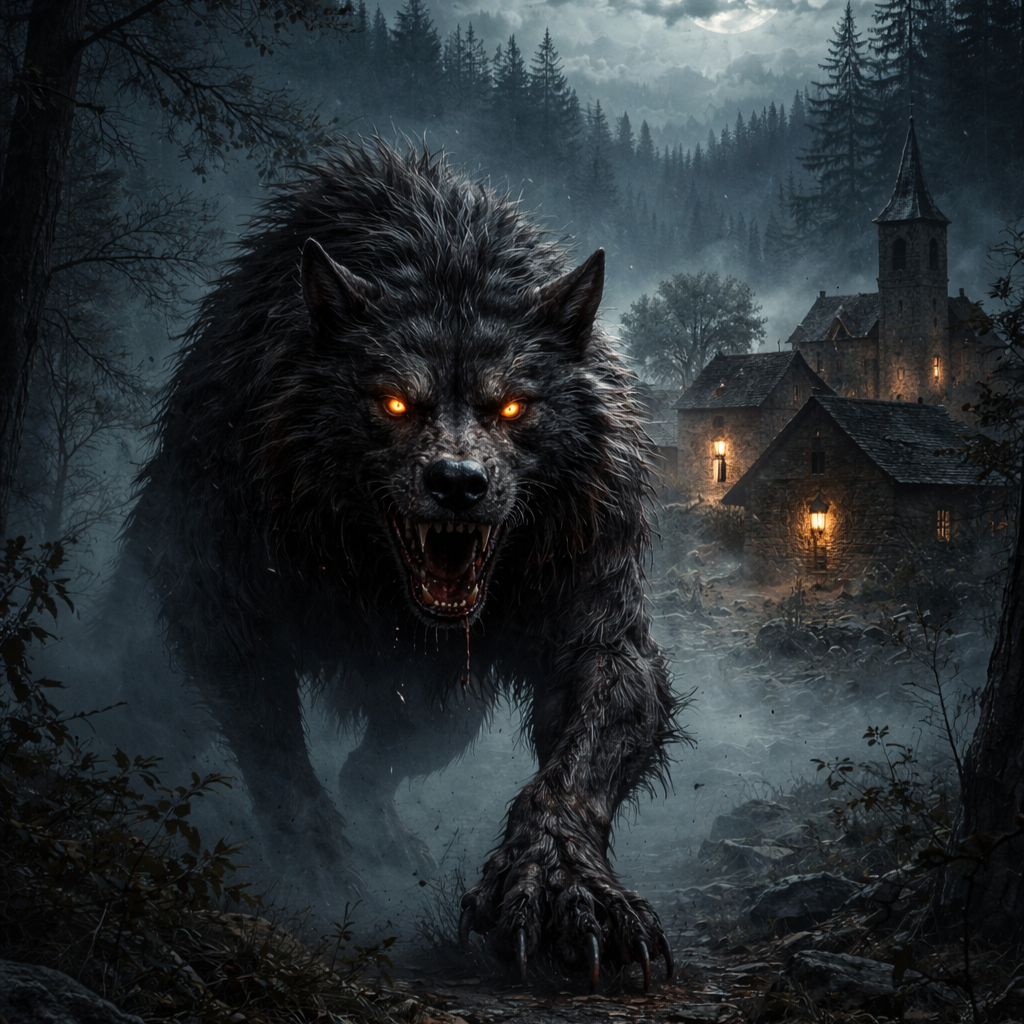
An artistic depiction of the Beast of Gévaudan stalking the forests of southern France (1764–1767), where more than 100 people were killed during one of history’s most infamous animal attack mysteries.
What is the Beast of Gévaudan?
The Beast of Gévaudan: Quick Stats
Active Years: 1764 – 1767
1764–1765: Peak attacks
1765: Antoine’s wolf
1767: Jean Chastel kill
Location: Auvergne and South-Central France
Estimated Victims: 113 killed, 49 injured
Primary Hunter(s): Jean Chastel (Local) & François Antoine (Royal)
Potential Identity: Sub-adult Lion, Hyena, or Wolf-Dog Hybrid
In the winter of 1764, the Enlightenment was supposed to have chased away the shadows of the Dark Ages. Reason was the new religion, and science its the holy water. But in the rugged mountains of south-central France, something was pushing back. It was no mere predator; it was a nightmare wrapped in fur that ignored bullets, outsmarted hunters, and tore through the social fabric of King Louis XV’s reign.
Today, the Beast of Gévaudan’s legend is still as relevant as ever… Much of our modern werewolf lore is drawn from this historical tale. From its wanton carnage, to its silver-bullet bane, The Beast of Gévaudan’s Historical Horror and mark on the supernatural world has not faded to this day. Tales like these remind us that before we had DNA evidence and LED flashlights, the dark was a place where logic and reason went to die.
The Class Conflict: A King’s Honor vs. A Peasant’s Life
The Beast wasn’t just a local problem; it was a PR nightmare. While the peasants of the Margeride Mountains were being slaughtered, the Versailles elite initially viewed the "Beast" as a symptom of rural ignorance. Provincial tall tales from people who couldn't tell a wolf from a shadow. It’s easy to be a skeptic when you’re sipping Bordeaux behind gold-leafed walls.
The true horror came from the realization that the people in power were just as helpless as the peasants in the fields. After the humiliating defeat of the Seven Years' War, Louis XV desperately needed a win. He sent the Royal Gunbearer, François Antoine, not out of empathy for the poor, but to perform a competency check for the judgment of Europe. When the state’s best hunters failed to stop the carnage, it exposed a terrifying truth: the Divine Right of Kings ended wherever the wilderness began. The "civilized world" was merely a thin veneer over an ancient, hungry landscape.
Religious Dread: The Scourge of God
In the 1760s, a "werewolf" wasn't just a biological fluke; it was a theological weapon. Bishop Gabriel-Florent de Choiseul-Beaupré famously declared the Beast a "Scourge of God," a divine predator sent to punish the people for their sins.
This turned the Beast into a physical manifestation of guilt. The monster was scary, sure, but the judgment of the Church was eternal. If the Beast is a punishment from God, then fighting it wasn’t just a hunt; it was borderline sacrilege. This trapped the peasantry in a cycle of terror where they were hunted by the animal in the brush and condemned by the priests in the pulpit. Imagine the psychological toll: looking into the eyes of a monster and believing you deserved to be its dinner.
Technology of Terror: The Limits of the 18th Century
The limitations of the era made the horror truly visceral. In modern horror, a flashlight battery dies; in 1764, the basics of survival were stacked against you.
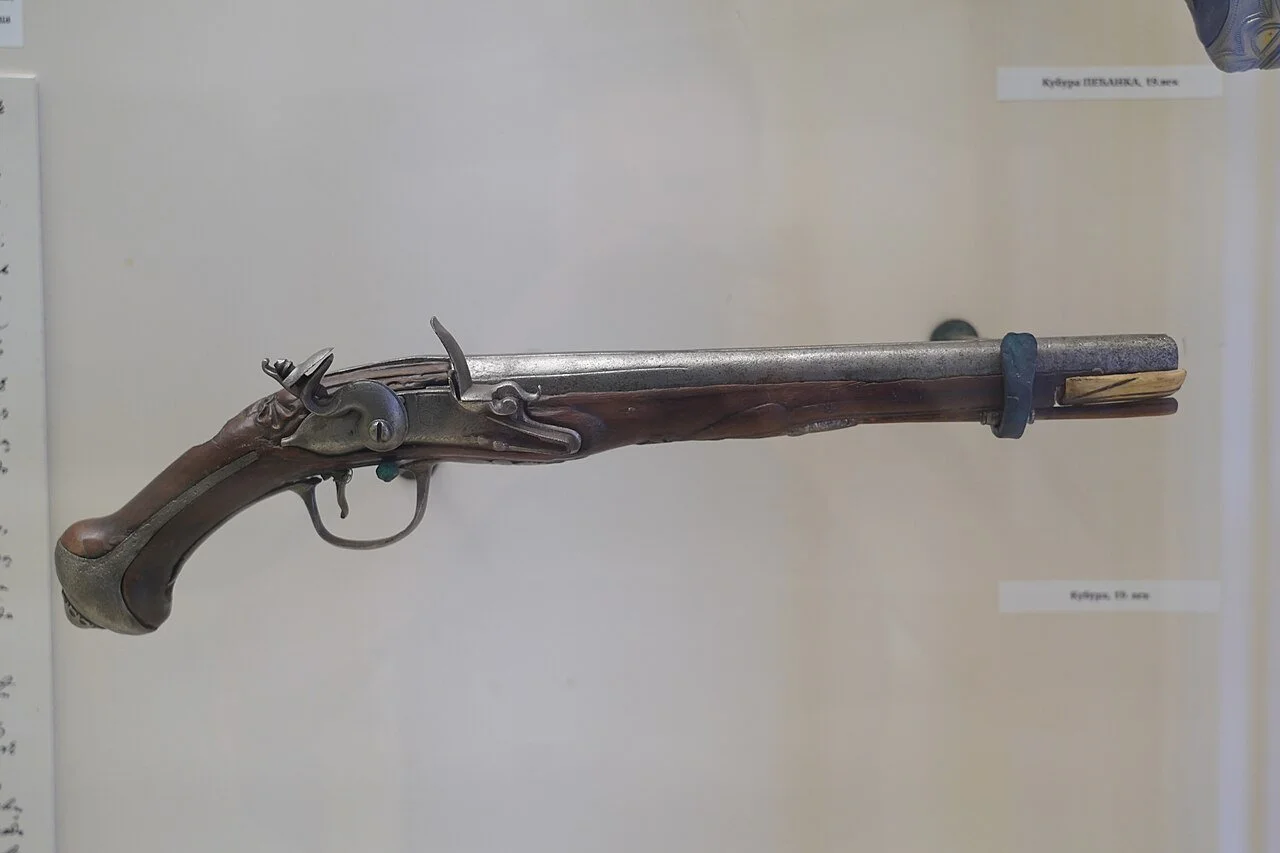
The "High-Tech" of 1764: A flintlock pistol. Beautiful to look at, but with a 30-second reload time, it was essentially a paperweight if you missed your first shot at a charging predator.
Flintlock Gamble: A musket could take nearly 30 seconds to reload and often misfired in the damp French mist. If you missed your first shot, you weren't a hunter anymore, you were a snack.
Sensory Deprivation: A lack of electric lighting meant the peasants’ horror was grounded in the sulfurous stench of black powder, the heavy, water-logged weight of a wool coat, and the flickering, unreliable light of a tallow candle that only illuminates five feet of the abyss.
Limited Communications: No phone or radio meant reliance on couriers and messengers. By the time anyone would get the message for help, the sender was likely doomed already.
Anything, a branch snapping, a low growl, the smell of wet fur could incite terror. What could lurk just beyond arm’s reach? All that and no way to call for backup.
The Anti-Hero: Jean Chastel’s Holy War
The man, the myth, the prayer book.
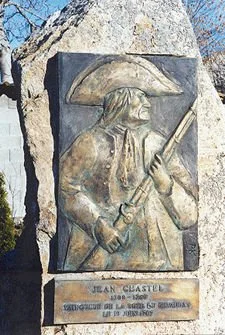
This monument in Auvergne commemorates Jean Chastel’s final stand against the Beast on June 19, 1767.
The official story "ended" in 1765 when the King's man killed a large wolf. The court celebrated, the press moved on, and the King checked "Monster Slayer" off his to-do list. But the bodies kept appearing. The true end came on June 19, 1767, at the hands of Jean Chastel, a local man who understood what Versailles did not. Chastel wasn't a decorated hero; he was a man with a checkered past and a local’s grit. Legend says he sat in wait, reading his prayer book, and fired bullets that were allegedly cast from a blessed silver medal, though the factuality of that is dubious.
This is where the silver bullet legend fused permanently with historical record. Whether the silver was actually "anti-monster" or just a 18th-century faith-power, it worked. Chastel fired twice, and the Beast dropped. But the wit of history is cruel: when Chastel brought the rotting, stench-filled carcass to Versailles to prove his kill, Louis XV was so disgusted by the smell (and annoyed a peasant succeeded where he failed) that he dismissed Chastel without a reward. So much for gratitude.
The Rational vs. The Supernatural: What Was It?
We love a clean answer, but our furry friend doesn't offer one.
The Rational Explanation
The autopsy described a creature with "non-wolf" features: a striped back, a massive head, and feline-like agility. Modern researchers suspect an escaped hyena or a wolf-dog hybrid. Perhaps even one trained by a human master to wear protective boar-hide armor, which would explain why it seemed "bulletproof."
It’s possible (but highly unlikely) that a private collector hosted bizarre and terrifying sub-Saharan creatures, one of which could have made its escape. This lends credence to the hyena theory, or even the idea that it could have been a lion. An 18th century peasant likely wouldn’t have the know-how to identify such a beast, and who knows what state it was in by the time it reached the king’s gaze.
But what else could it have been?
The Supernatural "Wolf-Leader"
If the biological answer feels too simple, the folklore is far darker. Many locals believed in the Meneur de Loups (The Wolf-Leader). A sorcerer who could command packs of wolves. Suspicion fell on the Chastel family themselves. Some believe Jean’s son, Antoine, had captured an exotic animal during his travels and trained it to kill. In this version, Jean didn't "hunt" the beast, he "retired" the family secret once the heat got too high.
Then there is the Loup-garou. To the people of Gevaudan, this wasn't a "man-wolf" from a movie; it was a curse. A person who had surrendered their soul for the power to hunt anything with impunity… even their neighbors.
The Takeaway: Why the Beast of Gévaudan Still Haunts Modern Horror
Whatever it was, the Beast of Gévaudan didn't just kill 100 people; it killed the Enlightenment’s certainty that the world was a safe, explainable place. We live in an age of satellite imagery, yet we still feel that prickle on our necks when the woods go silent. Whether it was a hyena in armor or a curse in fur, the Beast reminds us that the dark is still a place where logic goes to die and rationality laughs in the face of kings. And honestly? That’s much scarier than any wolf.
Looking for more werewolf lore? Maybe more spooky facts? Perhaps you just want to share your own experience with an unidentified furry menace below?
