The Chemistry of Chaos: A Guide to Mastering Emulsification
Achieving a perfectly stable emulsion is the hallmark of a technically proficient cook, transforming simple fats and liquids into the luxurious textures that define world-class cuisine. From the delicate balance of a golden Hollandaise to the robust, spreadable consistency of a well-crafted liver pâté, understanding the molecular bond between oil and water is essential for any kitchen repertoire. This guide deconstructs the chemical principles of emulsifiers (the mediators that prevent separation) and provides the technical steps necessary to ensure your sauces never "split" or lose their luster. Whether you are troubleshooting a broken vinaigrette or looking to refine your handmade mayo, mastering these foundational mechanics will elevate your cooking from home-style to professional-grade.
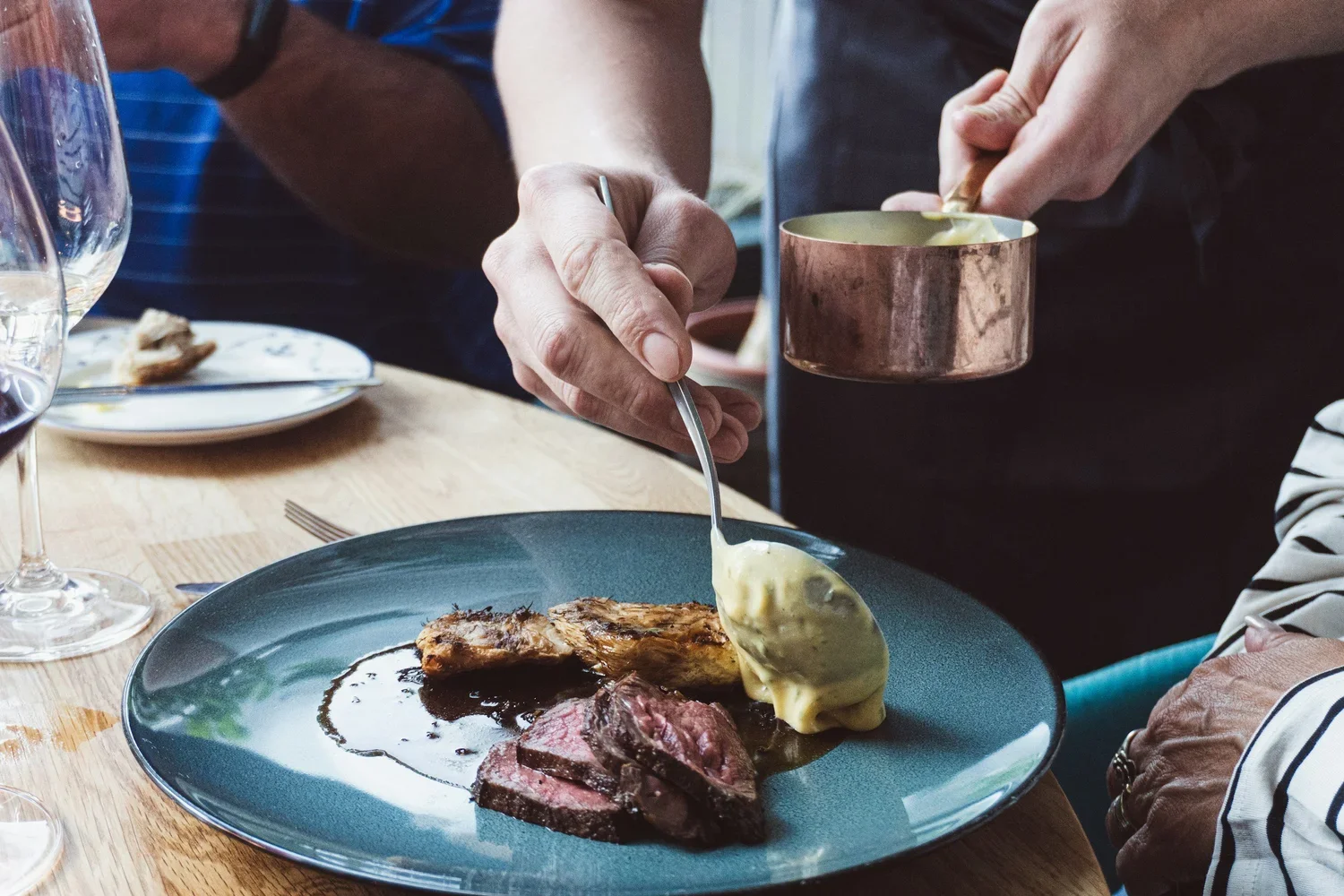
The finishing touch: a dollop of fresh hollandaise over perfectly seared beef.
The Science of Silk: A Masterclass in Culinary Emulsification
Have you ever stood over a saucepan, whisk in hand, watching in horror as your silky sauce transforms into a grainy, oily mess that looks more like a 3rd grader’s science experiment gone wrong than a five-star dinner? We’ve all been there. It’s the culinary equivalent death in the family… but this is no time to mourn.
If you want to elevate your home cooking from edible to exquisite, you need to master the art of emulsification. Whether you’re whipping up a creamy Hollandaise for a lazy Sunday brunch or whisking a zesty vinaigrette for a mid-week salad, understanding the bond between oil and water is the secret boost your kitchen skills need. In this guide, we’re breaking down the science of emulsions, exploring three distinct applications, and learning how to save a "broken" sauce before it hits the bin.
What is Emulsification? (Can’t We All Just Get Along?)
In the natural world, oil and water simply do not mix. Left to their own devices, they will separate into distinct layers, no matter how hard you shake them.
Emulsification is the process of forcing these two rivals to play nice. By breaking one liquid into tiny droplets and dispersing them throughout the other, you create a homogenous mixture. But to keep them from sprinting back to their respective corners, you need a mediator: an emulsifier.
Emulsifiers (like the lecithin found in egg yolks or the mucilage in mustard) are molecules with one "water-loving" end and one "oil-loving" end. They wrap around the oil droplets, acting as a buffer that prevents them from recombining. It’s basically diplomacy in a bowl.
Four Applications: From Silk to Zest
Emulsions are everywhere in the culinary world, but these three applications are the best way to see the magic in action:
1. The Heavy Hitter: Hollandaise Sauce
This is the final boss of emulsions, and the bane of hasty brunch-cooks everywhere. By slowly whisking clarified butter into egg yolks and lemon juice over gentle heat, you create a thick, buttery cloud of heaven. It’s high-stakes cooking; if it gets too hot, the eggs scramble; if you add butter too fast, it splits. But when it works? It’s legendary.
2. The Daily Driver: Vinaigrettes
A standard salad dressing is a temporary emulsion. By using a bit of Dijon mustard as your stabilizer, you can bind olive oil and vinegar into a creamy coating that actually clings to your greens instead of puddling at the bottom of the bowl. It’s a simple upgrade that makes a world of difference.
3. The Creamy Classic: Mayonnaise
Unlike a vinaigrette, mayo is a permanent emulsion. By carefully introducing oil to egg yolks and an acid, you create a stable, spreadable texture that defies the laws of liquid physics. It’s the foundation for everything from aioli to the secret sauce on your favorite burger. Think of it like the mid-point between the daunting labour of hollandaise and the carefree mixture of a salad dressing.
4. The Curveball: Pâté
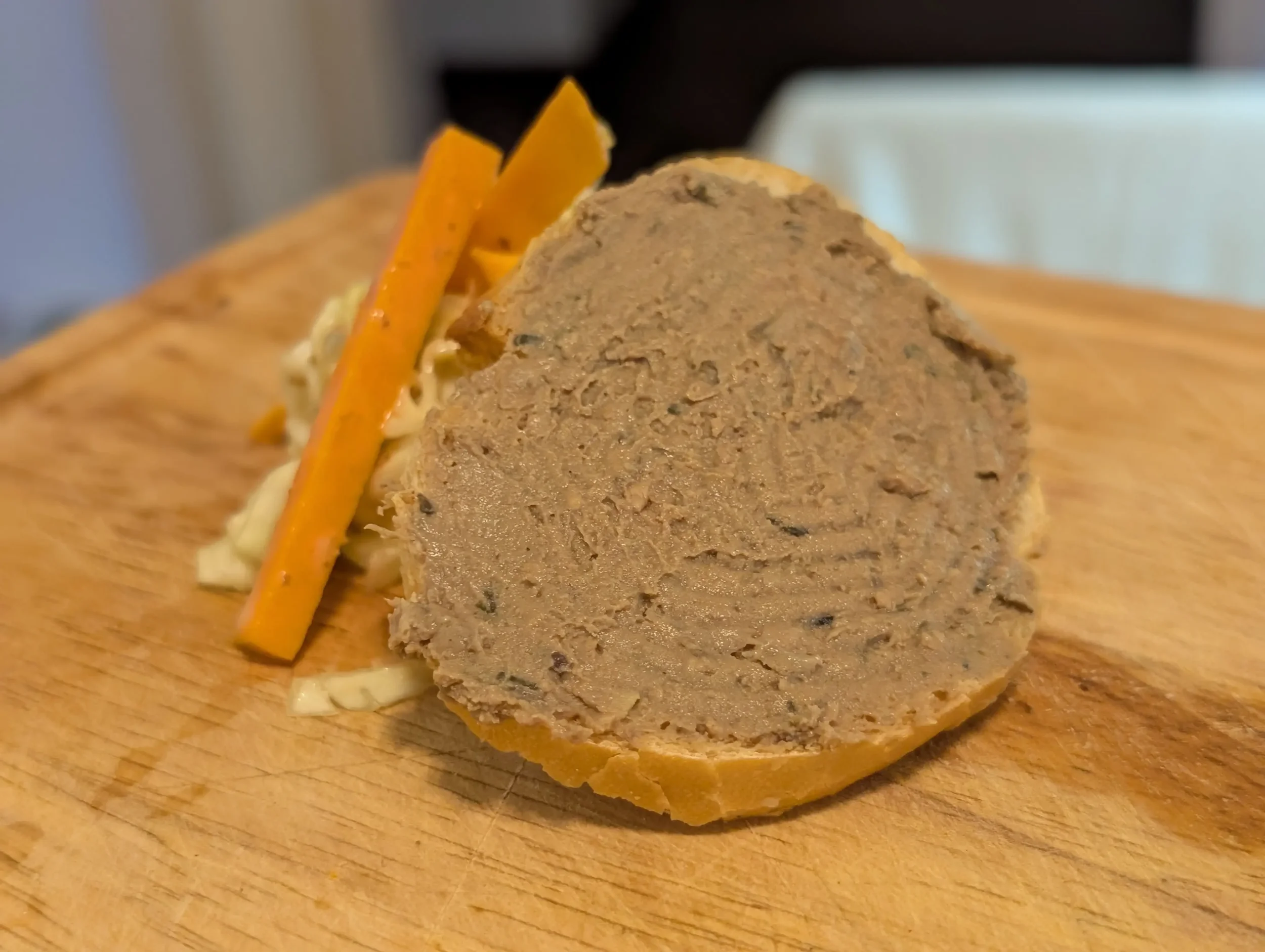
Achieving this level of silkiness is all about the chemistry of the emulsion. No lumpy textures here!
Pâté is to your charcuterie board what hollandaise is to brunch; the ultimate gamechanger. A totally different ballpark to the three aforementioned liquids. Instead of combining liquids and fats, we’re combining meat with fat into a creamy, spreadable paste (let’s call it a mousse, that sounds more appetizing). Rather than a delicate balance of liquid and oil bound by an emulsifier, we create a protein-based emulsion, but suspending the fat in a protein matrix. With perfectly cooked liver, clarified butter, and a delicate balance of other solids and liquids (often herbs such as tarragon and liquors like cognac) we gently craft a velvety smooth work of art without peer.
Troubleshooting: When the Sauce Splits
In cooking, a "split" or "broken" sauce means the oil has escaped its bonds and is floating on top. Don’t panic! You don’t have to order takeout just yet. Here’s how to fix it:
The "Slow Down" Method: If it’s just starting to break, stop adding oil/butter immediately and whisk vigorously with a teaspoon of (warm) water or lemon juice to re-establish the bond.
The Fresh Start: If it’s completely gone, place a fresh egg yolk (or a tablespoon of warm water) in a clean bowl. Slowly, and I mean slowly(!), whisk the broken mixture into the new base. It’s like performing sauce surgery. It takes a second, but it works.
Temperature Control: For Hollandaise, a split often happens because of heat. If it looks greasy, take it off the stove and whisk in a lone ice cube (or cool water). The sudden temperature drop can often pull the emulsion back from the brink.
In contrast, with pâté, it’s crucial to ensure the unbroken product is cooled evenly and promptly to prevent splitting.
The Takeaway: Master the Divide
Emulsification might sound like a word reserved for lab coats and textbooks, but it’s actually one of the most practical tools in a cook’s inventory. It’s the difference between a "fine" meal and an "Oh my god, are you a chef? How did you make this? Are you single?" meal.
The next time you’re in the kitchen, remember: you’re not just cooking; you’re managing the delicate peace between liquids that want nothing to do with each other. Keep your whisk moving, watch your temperatures, and don't be afraid to experiment. After all, even the best chefs have had a sauce split on them once or twice. It’s just part of the grind.
Happy cooking, and may your sauces always stay silky!
Wondering why your roux-based sauces come out lumpy? Check out my fixes here!
Upset that you can’t recombine your hollandaise? Did your dog eat all the pâté and have a runny tummy? Tell us all about it in the comments (preferably not about the dog’s excrement).
